
WHAT IS ARSHEEF?
ARSHEEF is a collaborative project that aims at promoting research in North Africa, the Middle East, the Caucasus, and South Asia.
Based on first-hand experiences of scholars and graduate students, ARSHEEF makes available up-to-date guides to libraries and archives across North Africa, the Middle East, the Caucasus, and South Asia.
We acknowledge that there might be financial, political, or personal circumstances that restrict travel for some, which is why ARSHEEF also endeavors to provide links to digital libraries and archives in and beyond these same regions.
ARSHEEF was founded and is led by Athina Pfeiffer and Mathias Ghyoot, funded by the Department of Near Eastern Studies, and co-sponsored by the Humanities Council at Princeton University. To learn more about us, read and watch the video below.
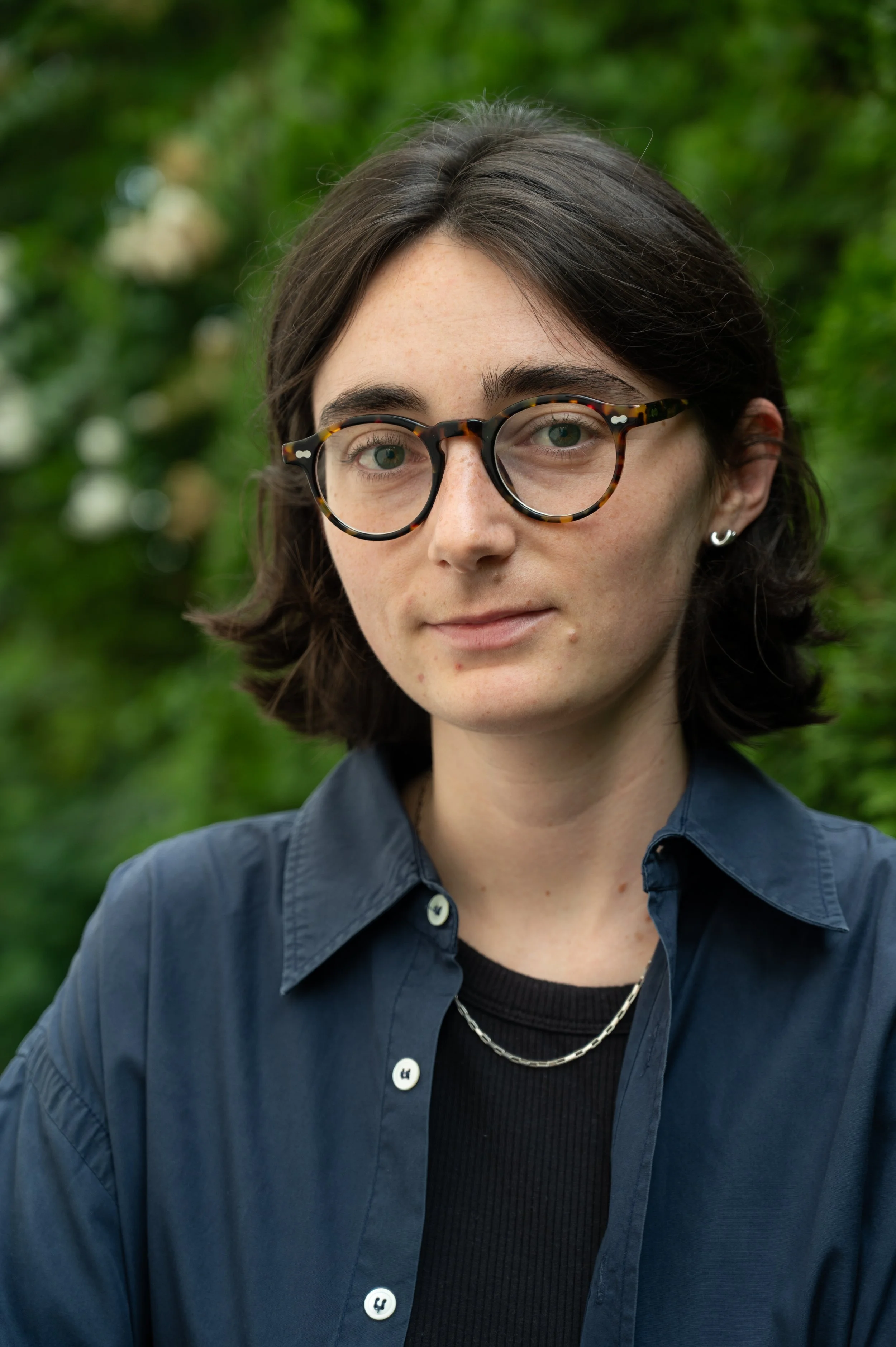
ATHINA PFEIFFER
Athina Pfeiffer is a PhD candidate in Near Eastern Studies at Princeton University, specializing in the social, material, and legal history of medieval North Africa, the Mediterranean, and the Middle East. Her dissertation examines the rise of notaries in the medieval Islamicate Mediterranean, drawing on documents and manuscripts in Arabic, Judeo-Arabic, and Persian.
Athina holds degrees in law and history from Sorbonne University and Panthéon-Assas University, both in Paris. She is also a Graduate Research Assistant at the Princeton Geniza Lab.
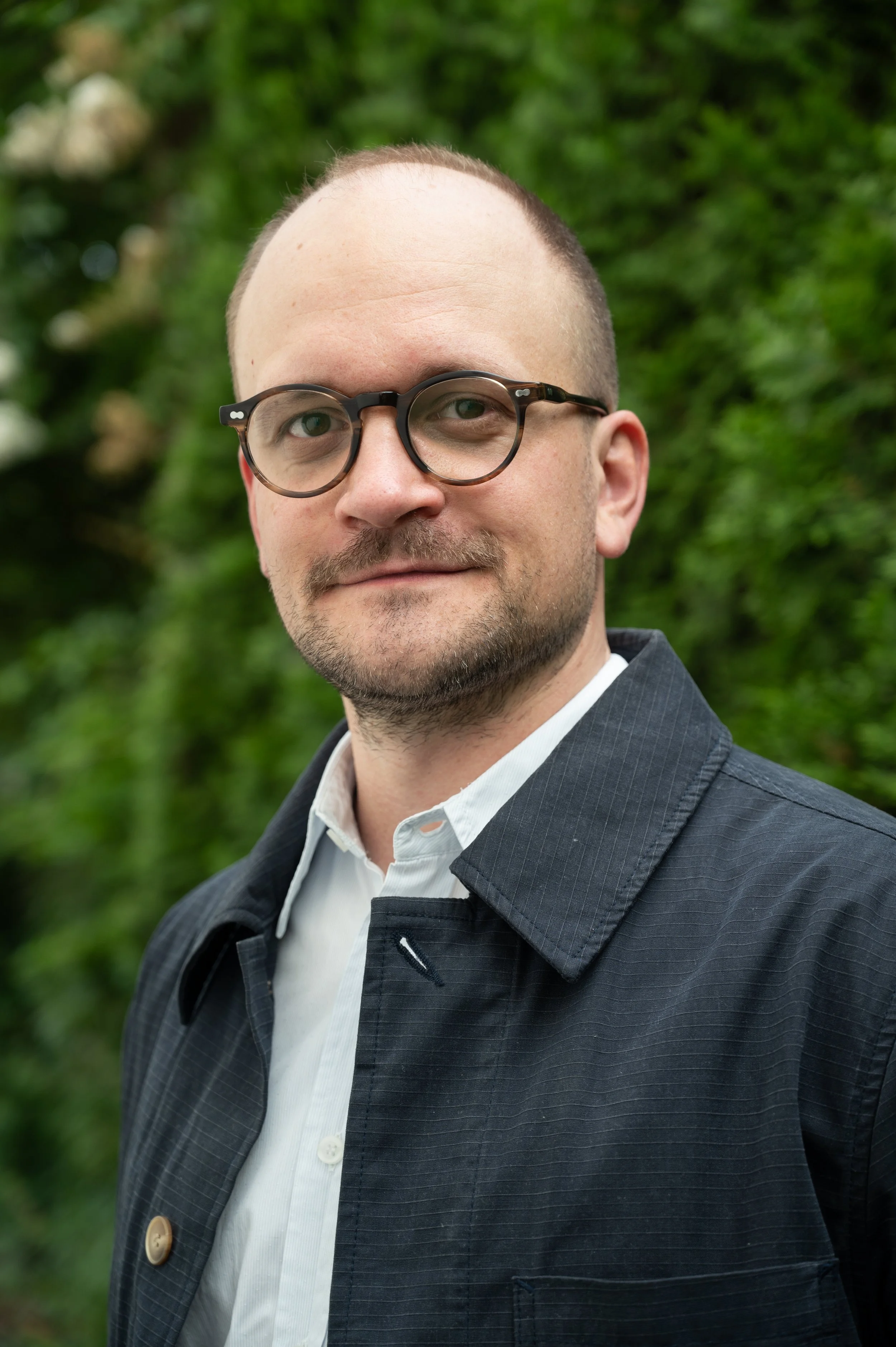
MATHIAS GHYOOT
Mathias Ghyoot is a PhD candidate in Near Eastern Studies at Princeton University. He specializes in the social and intellectual history of the modern Middle East and South Asia and has published widely on Islamism and Salafism. His dissertation explores the emergence of organized Islamic activism across the nineteenth- and early twentieth-century Muslim world.
Mathias is the author of Brothers Behind Bars: A History of the Muslim Brotherhood from the Palestine War to Egypt’s Prisons (Oxford University Press, 2025), and the editor and translator of Sayyid Qutb’s The America I Saw: Travels of an Islamist in the Making (Syracuse University Press, 2027).
Talk at the Institute for Advanced Study, Princeton
Digital Scholarship Conversations (November 2024)
Interview with the Medieval Academy of America
By Mathilde Montpetit, published in the Medieval Academy Graduate Newsletter (April 2026)
What is Arsheef? What problem were you trying to solve?
Athina: Arsheef is a collaborative project that’s really about supporting and promoting historical research across North Africa, the Middle East, South Asia, and the Caucasus. At its core, it’s a website where you can find step-by-step guides to accessing libraries and archives in these regions. So, for example, we cover very practical things: how to get permission to enter, how to navigate collections, how to request materials, and even small details like where to find the bathroom or where to find a decent, cheap place to eat.
What makes it collaborative is that it relies on contributions from the research community itself. That includes graduate students, postdocs, professors—but really, anyone who visits a library or archive can contribute. We have a short form that takes about 30 minutes to fill out, where people can share their experiences. After submission, Mathias and I review, edit, and publish the entries. So far, we’ve had contributions from around 35 colleagues, covering places as far apart as Morocco and India. And something we care a lot about is making sure everyone is credited for their work on the site.
Mathias: I’ll echo what Athina said, and add that we’re also trying to foster a broader culture of collaboration and sharing. Unlike the exact sciences, where people collaborate in labs and co-write papers, work in the humanities can often be quite solitary—or, at worst, plagued by gatekeeping. And the practical side of research, like how to access a family archive or navigate a huge, multi-branch state library, is often not taught in seminars. Arsheef really grew out of a desire to address these gaps.
Another really exciting aspect of the project has been the response from institutions themselves both large and small, public and private, as well as the librarians and archivists who work there. They’ve been incredibly welcoming, and they appreciate the increased visibility. In a time when so much is being digitized, the future of physical institutions, and the people who work in them, can feel uncertain. And yet the knowledge that librarians and archivists have about their collections remain invaluable. It’s something that simply can’t be replaced by digitization, and so promoting these institutions and encouraging people to actually visit them has become a key goal of Arsheef.
Athina: At the same time, we’re very aware that not everyone is able to travel. So Arsheef still includes a large collection of links to digitized materials, online union catalogues, and even Telegram channels where people have been sharing research materials (especially manuscripts) for years.
How do you think it might be useful for medievalists? How about medievalists who don’t study the Islamicate world?
Mathias: As a modernist who even thinks the eighteen century is old, I’ll let Athina answer this one!
Athina: I work on the medieval Islamicate world, and one of the striking things about this field is the sheer volume of material that’s come down to us—everything from grocery lists to high literary texts, in a wide range of languages, and written on all kinds of media, from fabric to paper, from codices to scrolls. Having tools that help you locate this material more easily, all in one place, can really make a difference.
And then there’s the element of surprise. Almost every time I visit an archive or library, I come across something, or someone, unexpected. I work with both long-form texts and documentary material, and it’s not unusual to find items that haven’t really been studied in years. And to build on what Mathias said earlier, there’s also the human side of things. Librarians aren’t always as visible as scholars, since they don’t necessarily publish or teach, but they have an incredible knowledge of their collections and are often very generous with their time. I remember, for example, last summer in Fez, I spent hours with a conservator at the Qarawiyyin Library going through medieval legal handbooks. It turned into an instant nerd-friendship!
Even for European medievalists who don’t work on the Islamicate world, I think there’s a lot in these libraries that would genuinely surprise them. The collections aren’t always as narrowly defined as people might assume. So one of our hopes with Arsheef is to encourage people outside our fields to look a bit beyond their own fields and maybe rethink where they search for material.
When and how did you guys come up with the idea?
Mathias: It all started in Cairo, a city we both love and have spent a lot of time in. Back in 2024, we were there to visit the National Library. We both needed to consult microfilms for our respective research projects, but we quickly ran into all sorts of practical challenges—figuring out the required paperwork, how to search the catalogues, how to submit request slips, navigate payment procedures, and understand the rules around reproduction. We did find one guide online—shout out to Dissertation Review!—but it was quite outdated. So we basically started writing everything down for ourselves in a notebook, just to keep track of the steps for the next day.
Athina: That’s when we started thinking about how useful it would be if researchers shared this kind of information with one another, and if there were a website that brought it all together in one place. There’s been a lot of excellent work on the theoretical and methodological aspects of libraries and archives, but we wanted something simple, practical, and easy to use, something you could check while preparing for a visit, or even pull up on your phone while you’re already at the library. You know, those moments when you’re at the Egyptian National Library and suddenly can’t remember at what point a reproduction request exceeds the cash limit and you need someone with an actual Egyptian credit card to pay for you—it’s that kind of situation we had in mind.
Mathias: I guess you can think of Arsheef as one big, well-organized notebook, shared by a community of researchers. The only difference being that you can actually read the handwriting!
What was the process of making it happen – finding funding, building the website, etc.?
Athina: We built the website ourselves, paying out of pocket for a Squarespace subscription. At the beginning, it was really just a fun experiment: we wanted to see if we could get other people involved. We didn’t have any training in web design, and not much of a budget, so the site, as it exists today, is very much homemade. We started by writing guides to the libraries and archives we visited in Egypt, and then later in Tunisia. After that, we reached out to colleagues we knew had done research recently and asked if they’d be willing to contribute. Everyone we contacted was incredibly enthusiastic.
Mathias: Once we had a solid number of guides online, we decided to expand the project to include digital resources as well. At that point, it started to feel like something that had gained enough momentum among colleagues to really work. So we approached the Department of Near Eastern Studies at Princeton University, and later the Humanities Council, both of which very generously agreed to support us and help keep the website running. That said, like a lot of things in academia, much of the labor that goes into the site—both from us and from our contributors—is unpaid.
Athina: Money or not, since we launched the website in September 2024, it’s grown steadily, and we’ve had the chance to promote it at several venues, most recently at the Institute for Advanced Study at Princeton. We now have more than 40 guides to libraries and archives across 18 countries, and it continues to expand. While we still contribute guides ourselves (most recently from Morocco, and soon from Jordan) the majority come from colleagues. We also try to keep the guides up to date. For example, if we hear a friend is heading somewhere, we’ll ask them to check whether certain details are still accurate, like whether you can use your phone to take photos, or if a particular section is still under construction.
Mathias: Looking ahead, one of our main goals is to make the site available in other languages—especially Arabic and Persian—and to improve the design so it’s even more accessible, particularly on the phone. That’s something we’re actively working on, although it has been challenging to find both the funding and the time alongside our other research projects.
Has anything about the response surprised you? What have people found most useful?
Mathias: I’m always thrilled when we receive a new guide out of the blue. Not only do we get to learn about a new institution, but we also get to connect with incredibly talented researchers from across the world who’ve spent hours, if not days, in a library or archive and are willing to share that knowledge, and excitement, with others. That’s really what the whole project is about: getting excited about research. I’ve also been surprised by how many Arsheef users are actually out there. I lost count of how many people came up to me at last year’s MESA in Washington, D.C., to say just how enthusiastic they were about it.
Athina: What still surprises me is that some people assume we have some kind of special access to these institutions—which we definitely don’t!—just because we run Arsheef. People will reach out asking if we can help them secure reproduction rights for a publication, track down relatives in an archive, or even scan something for them in Istanbul. I wish we were that powerful! That said, we really do appreciate the level of interest the site is getting. And honestly, the best reaction I’ve had so far was at a workshop in January. Someone came up to me and said, “Wait, aren’t you behind Arsheef? Thank you so much for creating it… can I hug you?” And I thought, okay, this thing is actually working.
Has working on Arsheef changed your research, or your experience of graduate school?
Mathias: Arsheef has definitely pushed us to go places we might not otherwise have gone—and to take chances. By that, I mean visiting libraries and archives we don’t know much about beforehand, or that fall outside our usual areas of interest, and allowing ourselves to be surprised. Since Athina and I are also a couple, we often travel for research together, and we joke about how she always ends up finding more relevant material in a library I’m interested in, and vice versa. Even though graduate research is often shaped by quite narrow questions and geography, part of what we’re trying to do is encourage people—within the constraints of time and budget—to leave room for the unexpected. I remember, for instance, visiting a small, family-run library in Tunisia where Athina needed to consult a manuscript. I assumed I’d just be waiting around, but it turned out to function as a gathering place for local intellectuals. Within minutes, I struck up a conversation with an elderly man who turned out to have been a member of a religious organization from the 1920s that I study. A few days later, I found myself interviewing him and going through his private archive.
Athina: I can only echo what Mathias said, and add that Arsheef has also connected us with an incredible community of scholars. Whether you’re a medievalist or a modernist, a shared interest in libraries and archives really brings people together across disciplines and regions. And importantly, that community also includes the librarians, archivists, and private individuals who make all of this possible. So if there’s one thing we’d encourage people to do, it’s to get out there and meet them.
What advice would you give to another grad student who would be interested in doing a project like this – something that is research-related but different from publishing your own research?
Athina: I’d suggest finding a good colleague—and the time. For our project, having both a medievalist and a modernist has been a real strength, but depending on what you’re building, that partnership could be more narrowly defined. What matters most is finding someone you genuinely work well with. And I mean work, not just think well with. Someone who shares your expectations, moves at a similar pace, and cares about the same things. That can be anything from meeting deadlines to paying attention to grammar. And maybe most importantly, someone who’s fun to work with!
Mathias: As for finding the time, in our line of work it’s often in short supply. That’s exactly why I think it’s important to make the time. For some people, that genuinely isn’t possible due to personal circumstances or family responsibilities. But for others, it comes down to choosing to allocate the time needed to build something like this—not just for yourself, but for others. At first, that might seem counterintuitive. In practice, though, we’ve found the opposite to be true: when the intention to help is clear, others are often willing to make time to contribute as well. At that point, time starts to feel less like a constraint, and collaborations begin to form more naturally, often feeding back into and strengthening your own research in the process.