
Republic of Türkiye Directorate General of Foundations Archive
Written by Rayan Khadeer (2026)
INtroduction
Founded in 1936, the Republic of Türkiye Directorate General of Foundations Archive (Vakiflar Genel Müdürlügü Arshivi, or VGMA) in Ankara holds one of the largest collections of Ottoman documents in Turkey. The archive contains more than one million documents and 8,100 registers (defters) relating to pious foundations in the Ottoman Empire and Turkey, ranging from endowment deeds (vakfiyes) to appointment and administrative registers concerning individual waqfs (endowments).
Researchers can access the archive through the Research Center at the Directorate General of Foundations’ Ankara branch. The branch is open from 9am to 6pm on weekdays, excluding holidays, although the Research Center itself closes at 5:30 p.m.
Location: Google Maps
GOING THERE
There is still conflicting information about the archive’s location, which can be a major source of confusion for visiting researchers. The archive was previously located in Ulus, but that building has since been closed and abandoned. The archive and research center are now housed at the Ankara Regional Branch of the Directorate General of Foundations, next to the Kizilay Metro Station, just past Güvenpark.
GETTING IN
To enter, use the side entrance, which is also used by staff. From there, you will pass through a security checkpoint. Let the staff know that you are a researcher, and they will issue you a visitor card in exchange for your passport or other ID. You can then take the elevator to the 13th floor, where the research center is located.
Finding your material
When you arrive on the 13th floor, go through the double doors on your right to reach the Research Center. Introduce yourself to the staff, who will help you log in to a computer terminal and access the archive.
Once you are logged into the system, there are two types of searches you can conduct: one for specific waqfs and another for individual archival documents.
For the first type, you can search by the name of a particular waqf or its founder, and the system will return all indexed documents associated with that name. You can also search by place name to generate a list of recorded waqfs for which the archive holds documents relating to a particular city or region. The second search method is more similar to the system used at the Ottoman Archives in Istanbul. It allows you to search across different collections using catalogue numbers. For indexed documents, you can also conduct keyword searches.
One thing to keep in mind when using the search system is that it provides access to documents relating to waqfs held by archives and libraries throughout Turkey, not just those housed at the VGMA. This can be a drawback, since the images of documents available through the VGMA are often quite dated, and their quality can be substantially worse than that of the same documents accessed through their original archives. To limit your search to the General Directorate of Foundations Archives, make sure that the fonds you select begin with “VGMA.”
For researchers interested in the archive’s various defters, keep in mind that most have not yet been indexed, so knowing the catalogue number can be extremely helpful. The archive’s published catalogue, Vakiflar Genel Müdürlügü Arshiv Rehberi, is an essential resource for identifying these materials. Copies can be found online, and the Research Center also keeps a physical copy on site for researchers to consult.
Another point to keep in mind when working with defters is that there are generally two sets of images for each one: black-and-white and color. The black-and-white images are found under the VGMA.DEFTER collection, while the color images are available under the VGMA.DEFTER.RENKLI collection. Both sets share the same catalogue number. However, because the color images are generally newer scans, not every defter has a corresponding color version. It is therefore worth checking both collections when conducting a search.
Ordering your material
Once you have found the documents you are looking for, simply click the “View” button to browse the document or documents you have selected. If you found an item through a keyword search, the system will display only the relevant section of the full document. To access the complete document, click the folder icon.
Ordering scans
The General Directorate of Foundations Archive’s collection is accessible only through the on-site system. Visiting researchers will therefore likely want to obtain copies of documents they consult. Fortunately, the process is fairly simple.
First, let the staff know that you would like to request scans of documents. It is best to do this early during your research visit. They will ask you to fill out a researcher request form and create a folder with your name on the desktop of one of the computer terminals. You can then right-click and save the document images you want to this folder. Keep in mind that the files saved in this folder are accessible only from that particular computer terminal. If another researcher is using the computer or you need to switch to a different terminal, ask the staff for permission to transfer your files to the other computer.
This can be done either via USB or by asking the staff to email the documents to you. Once you have saved all the documents you need, you will need to pay the digital document request fee. As of 2026, the fee is 0.50 TL per image. When you are ready to pay, the staff will provide you with the archive’s bank details, and you can make the payment via online bank transfer.
Researchers without a Turkish bank account can ask the staff about alternative payment methods. In my experience, however, using a fintech money-transfer service such as “Wise” worked without any problems. Once you email the staff the confirmation of the transfer, they will release the documents to you. You can either save them to a USB drive or ask the staff to email them to you.
Food and well-being
The bathroom is located just outside the Research Center. Drinks such as water, tea, and other beverages from the cafeteria are allowed inside the Research Center.
On the 14th floor, one floor above the Research Center, there is a cafeteria that provides free lunch to visitors and staff from 12 to 1:30pm. The meal usually includes a salad, soup, one or two main dishes, and dessert. The food is generally quite good and very filling, but the cafeteria serves a set menu each day, so researchers with dietary restrictions or allergies may prefer to eat elsewhere. Kizilay is just across the street and offers a wide variety of restaurants, cafés, and other places to eat.
Additional remarks
Despite its large collection, this archive is surprisingly underused. The Research Center has only six computer terminals, but researchers generally do not need to worry about finding an available one, as the archive is usually very quiet. Most visitors are genealogists or hobbyists who come for a short period to obtain a specific document or two.
Long-term researchers , particularly those from outside Turkey, are relatively rare. As a result, do not be surprised if staff throughout the building—not just those at the Research Center—take an interest in you or your research. In general, the staff are extremely helpful and friendly, so do not hesitate to ask them for assistance or advice.
It is worth noting, however, that while some staff members speak English, most communicate only in Turkish. Researchers planning to visit the archive should therefore have at least some conversational Turkish.
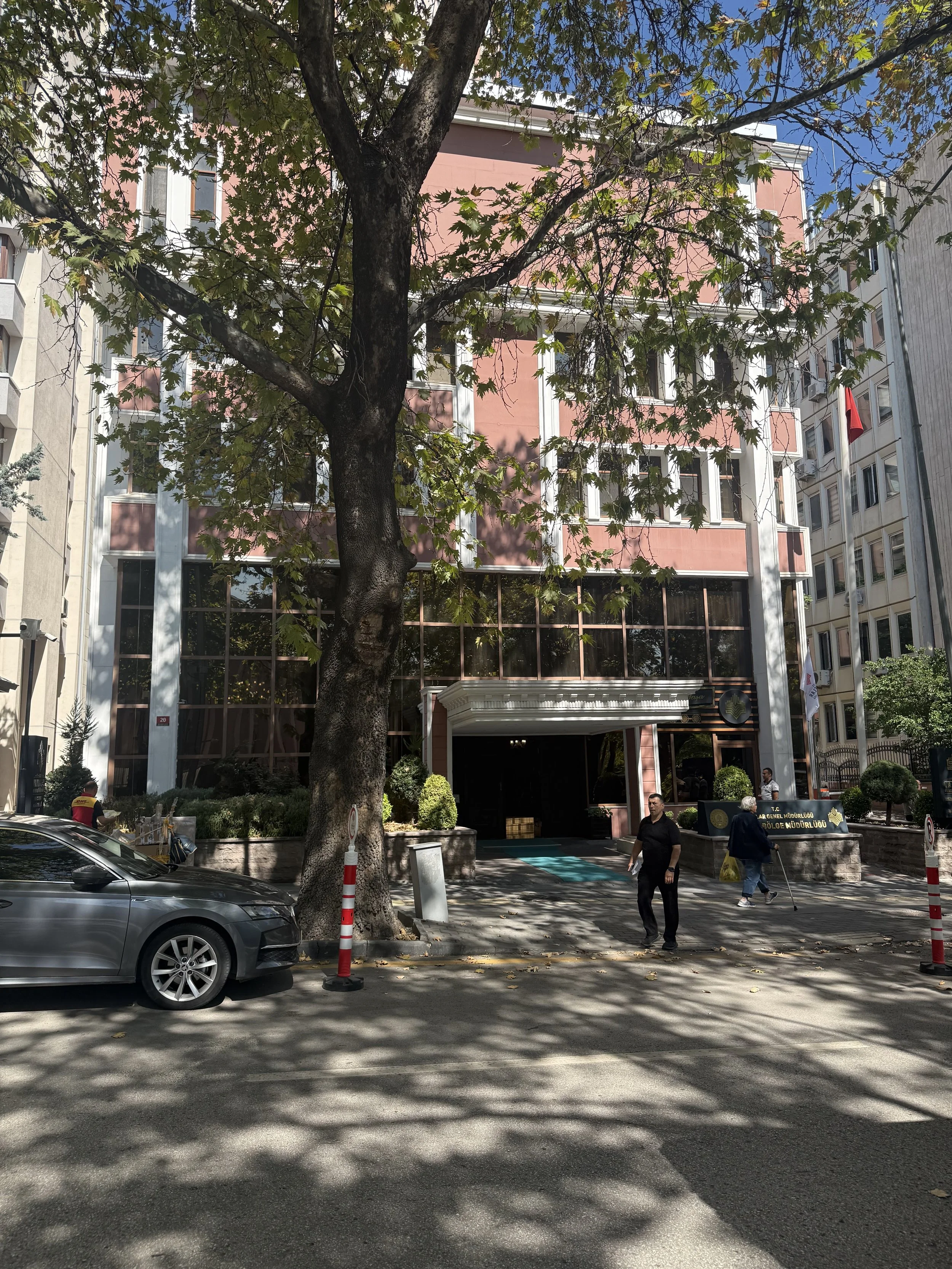
The Republic of Türkiye Directorate General of Foundations Archive
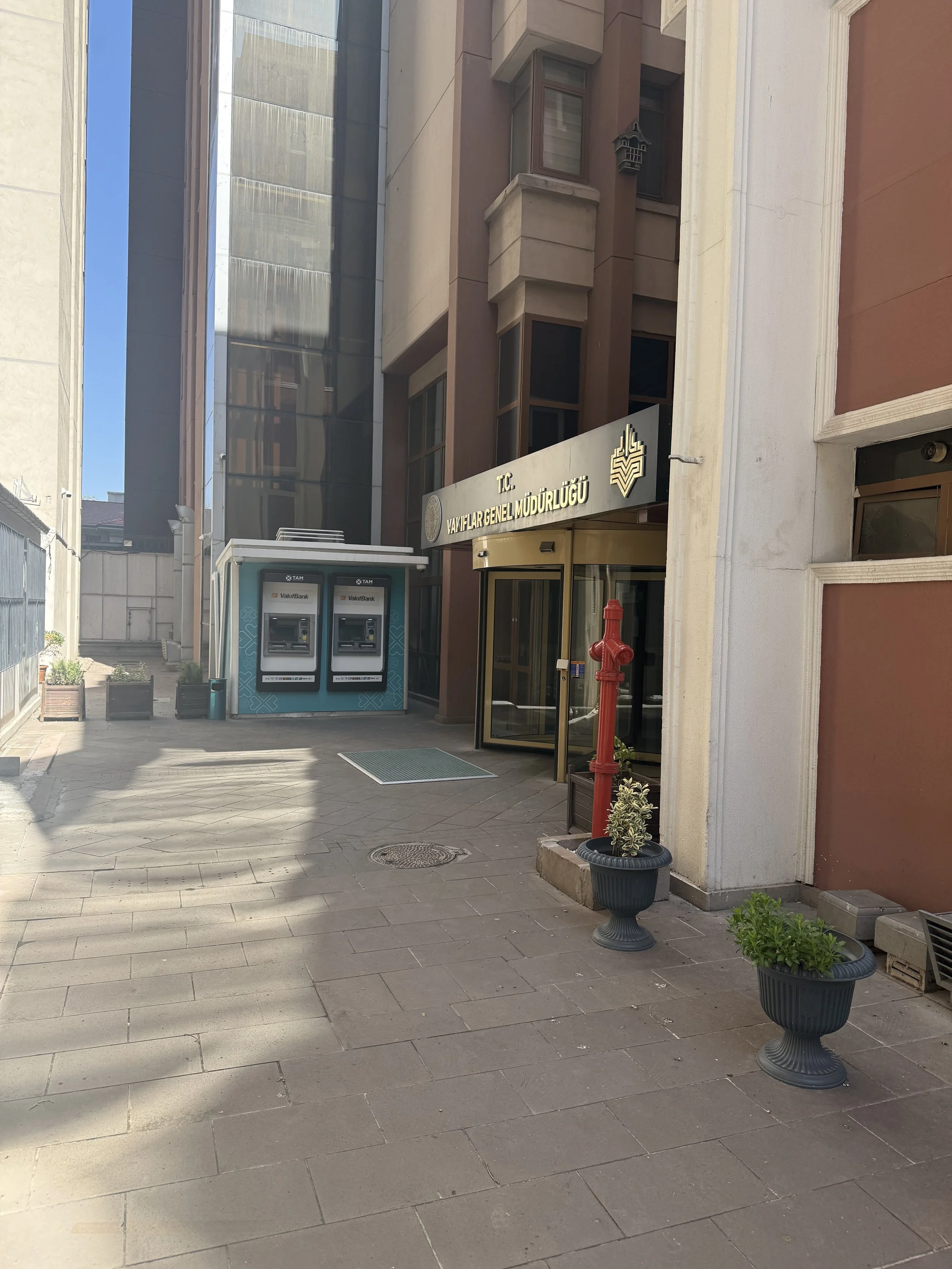
Side entrance of the Republic of Türkiye Directorate General of Foundations Archive